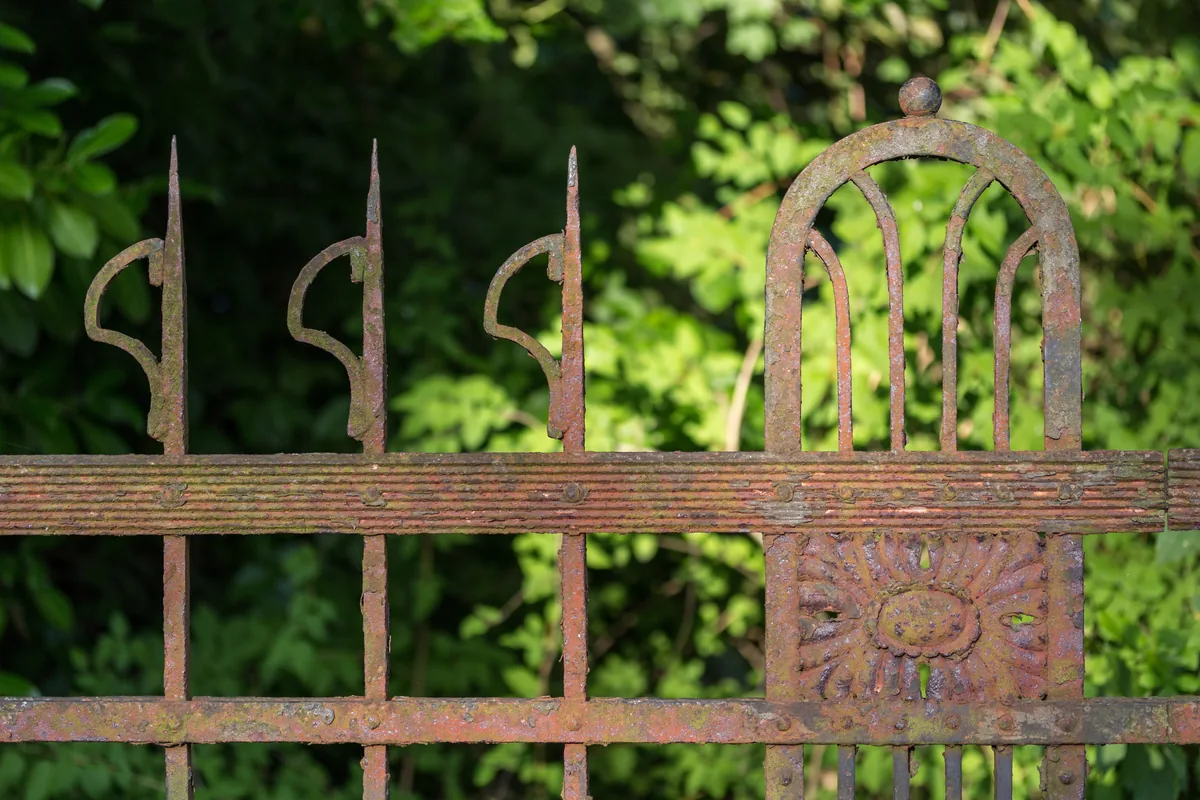
Does Wrought Iron Rust In Oceanside
We connect you with independent Oceanside fence contractors.
Yes. The more useful question is how fast, and the answer changes more over a mile in Oceanside than it does over a decade anywhere inland. Salt in the air is the single biggest factor in how long metal lasts here, and the drop off with distance from the water is steep enough that two houses in the same city can have completely different answers.
The Numbers Are Steeper Than People Expect
Salt spray concentration falls off most sharply over the first several hundred to few thousand feet from the waterline. Corrosion testing has found iron samples corroding roughly ten times faster at about 80 feet from the shoreline than identical samples placed around 800 feet inland.
Ten times, over a distance you could walk in three minutes. That is the number worth carrying around, because it explains why a neighbor two streets closer to the sand has a rust problem you do not, or the other way round.
Accelerated corrosion has still been detected as far as five to ten miles inland, so it does not switch off cleanly. But the severe band is narrow, and within about a quarter mile of the water is where it is at its most aggressive.
What You Are Buying Is Probably Not Wrought Iron
Worth clearing up, because it changes the answer. True wrought iron is a specific material with a fibrous structure and very low carbon content, and it has barely been produced commercially for the best part of a century. What gets sold as a wrought iron fence today is almost always mild steel, formed to look like it.
This is not a scam, it is just what the words have come to mean. It matters because mild steel rusts readily and needs a coating system doing the protecting. The fence is only as good as that coating, and near the ocean the coating is the entire product.
How Long Galvanized Steel Actually Lasts Here
Galvanizing is a zinc layer that corrodes instead of the steel underneath. It works well and it is not permanent. In high corrosion coastal environments galvanized steel typically starts failing somewhere in the eight to twelve year range.
Eight years is not a disaster and it is not the twenty five you might have had in mind. If you are within a quarter mile of the water and someone quotes you a metal fence without mentioning the coating system, that is the conversation you should be having instead of the one about style.
What Actually Holds Up Near The Water
Hot dip galvanized then powder coated is the serious answer for steel. The zinc does the sacrificial work and the powder coat keeps salt off the zinc, and the two together last considerably longer than either alone. Powder coat straight onto bare steel looks identical on day one and is a much shorter lived product.
Aluminum sidesteps the problem. It does not rust, because what forms on aluminum is an oxide layer that seals the surface rather than a scale that flakes off and exposes fresh metal underneath. It is not as strong as steel, which is why aluminum fencing is usually decorative or pool fencing rather than security fencing, but on the coast it removes the failure mode entirely.
Vinyl removes it too, and for a different reason. There is no metal in it to lose. Within a quarter mile of the water that is why vinyl tends to be the cheaper fence over twenty years even though it is the more expensive fence on day one.
The Part Everyone Forgets: Fasteners And Hardware
This is the most useful paragraph on this page. Whatever the fence is made of, the things holding it together are usually the first casualty, and they are small enough that nobody asks about them.
Salt gets into the joint between a board and a rail, or into a hinge, and works on the fixing from the inside where you cannot see it. The result is a fence with perfectly sound boards hanging off corroded nails, or a gate with a good frame that no longer latches because the hinge has gone.
Hot dipped galvanized or stainless fasteners and hardware cost a little more and are the difference between a coastal fence that lasts and one that sags in year six. If you take one thing from this page, make it this.
So Where Do You Live?
- Within about a quarter mile of the water, which covers Townsite, much of South Oceanside and the streets near the harbour: this is the aggressive band. Vinyl or aluminum, and stainless hardware if you use anything else
- A mile or two back, including Fire Mountain and much of San Luis Rey: manageable. Hot dip galvanized and powder coated steel is reasonable, and good fasteners still pay
- Well inland, including Rancho Del Oro, Vista and Bonsall: normal rules apply. Standard galvanized hardware is appropriate and steel behaves the way it does anywhere
If You Already Have A Rusting Metal Fence
Surface rust on an otherwise sound fence is worth dealing with early, because rust does not stop on its own. Wire brushing back to clean metal, priming with something intended for the job and recoating buys years, and it is a fraction of the cost of replacement.
The point of no return is when rust has gone through the section, usually at the base of a post where it meets concrete or soil and stays wet. At that stage the post is structural scrap and no amount of paint changes it. Poke a suspect post at ground level with a screwdriver. If it goes in, that post is done.
Everything above is general information about materials and conditions rather than advice about a specific fence. A contractor who has walked the line and knows how far you are from the water is the one to price it.
Get a free quote from an Oceanside fence contractor
Tell us what you need. We pass it to one local contractor who comes out, measures, and gives you a price. No cost, and nothing to sign.
Call Now(747) 307-5501We connect you with independent Oceanside fence contractors.